The Evolution of the Golf Ball
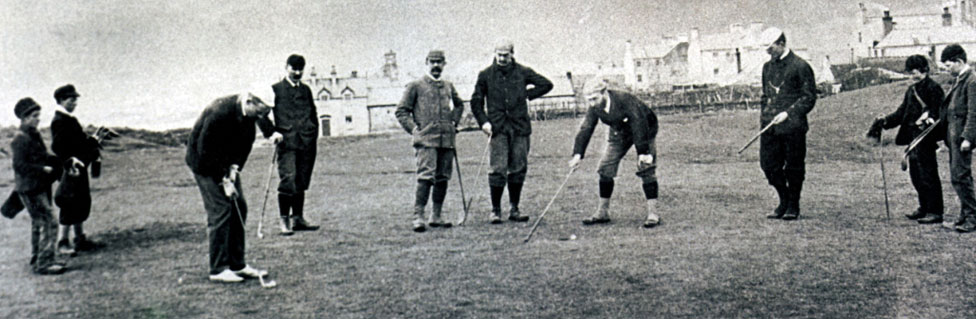
The golf ball has changed in material, construction and flight over the centuries. Leather balls packed with feathers gave way to moulded gutta-percha, followed by the wound rubber core. Each change affected how the ball played and how much it cost to make.
The main stages below cover early balls, the featherie, the gutty and the rubber-core Haskell ball. Wooden balls also appear in many accounts, but their place in Scottish golf needs a closer look.
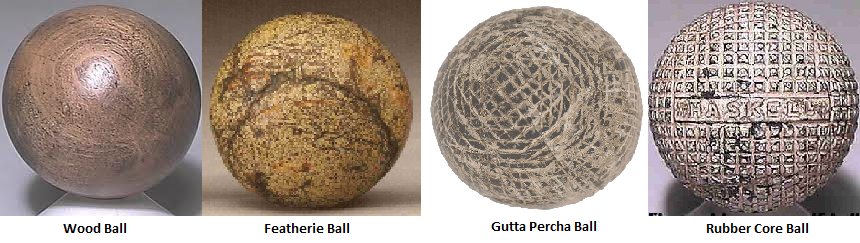
Early golf balls: wood and leather
Wooden balls were used in related European games, but there is no definite evidence that they were used in early Scottish links golf. Leather balls stuffed with hair are part of that early history. Scottish Golf History explains the evidence and uncertainty.
The featherie: feathers inside a leather cover
The featherie, also spelled feathery, was made by packing feathers into a stitched leather cover. Makers worked with wet materials. As they dried, the leather tightened around the feathers to form a firm ball. A coat of paint finished the surface.
Making a featherie took skilled work, which made it expensive. It remained important for generations, until cheaper gutta-percha balls began replacing it in the mid-1800s. Its exact origin is uncertain, so 1618 should not be treated as a confirmed invention date.
The gutta-percha ball: easier to make
Gutta-percha balls, known as gutties or gutty balls, appeared in 1848. The material could be softened with heat and shaped into a ball. Unlike a featherie, it did not need a stitched cover packed by hand.
Players noticed that a marked or scuffed surface could perform better than a smooth one. Makers began adding deliberate surface patterns. Moulds later made production faster and more consistent, helping reduce the cost of golf balls.
The Haskell ball: a wound rubber core
In 1898, Coburn Haskell developed a ball with a rubber core wrapped tightly in rubber thread and enclosed in a cover. He worked with the Goodrich company on the design. The USGA describes Haskell’s role in the ball’s development.
The wound construction changed golf-ball performance. Manufacturers continued experimenting with covers and surface patterns, including raised bramble designs and dimples. Mechanized winding helped them produce rubber-core balls in larger quantities.

A common size standard
Golf’s governing bodies did not always agree on ball size. The smaller British ball remained an option under R&A rules long after the USGA required a larger minimum diameter. On January 1, 1990, The R&A ended the smaller ball’s use, bringing the minimum diameter into line at 1.68 inches. The USGA’s history of ball-size rules traces that change.
Custom logo golf balls for your next corporate event
Planning a company tournament, client gift or team golf day? Level 2 Sportswear can help you choose golf balls and packaging featuring your company logo. Tell us your quantity, budget and event date so we can recommend suitable options.
Start planning around your event date. Timing depends on the ball, quantity, logo approval, packaging and availability. Ask us to confirm the current schedule when you request your quote.
Where do you go when you need special, unique and creative promotional items? The team at Level 2 Sportswear is waiting for you. We will work with you to source the perfect promotional product, trade show giveaway, corporate gift, or to develop a safety and service award program that your employees are sure to love.
OUR GOAL IS TO MAKE YOU LOOK GOOD!